


Science in Small Bites
Segment one: Butt Breathing
Last week’s column ended with the question, “Can we breathe through our butt?” The short answer is yes, but in a specific way. So, don’t let your imagination go wild. The question was not meant to be flippant, but rather to discuss recent research indicating that oxygen can enter the bloodstream outside the lungs. In certain medical situations where the lungs are compromised, oxygen can be administered through the anus.
When Dr. Takanori Ta-kebe’s father had pneumonia and was put on a ventilator, he realized how invasive the procedure is. Dr. Takebe, a stem cell biologist and medical doctor at Cincinnati Children’s Hospital Medical Center, began a research project to determine whether oxygen could be delivered medically to the vascular system when the lungs are unable to provide enough oxygen.
Dr. Takebe was well aware that the digestive tract has a vast surface area rich in arteries, capillaries, and veins. Enemas are often used to deliver medication into the bloodstream through the anus.
Dr. Takebe and his colleagues developed an enema containing perfluorodecalin, a compound with an affinity for oxygen. When administered into the anus of mice and pigs under low-oxygen conditions, the blood went from a murky hue to a bright red color, indicating an infusion of oxygen.
Results from human trials confirmed the efficacy of perfluorodecalin in raising blood oxygen levels when injected into the anus. Research continues on this novel treatment, but it could be a landmark treatment in emergency cases involving compromised lungs.
Dr. Takebe won the Ig Nobel Prize in 2024 for his discovery. When he accepted the prize, he brought the house down in laughter when he remarked, “Thank you so much for believing in the potential of the anus.”
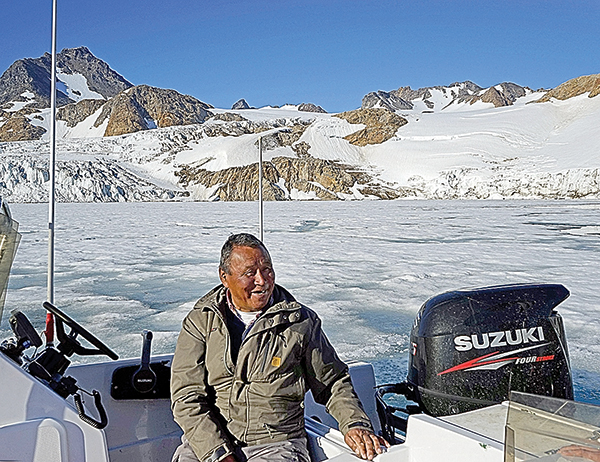
Segment Two: The indigenous Inuit people of the Arctic respond differently to immersion in cold water than non-Arctic people – why?
Some years ago, I was teaching a class on human thermal stress at the OSHA Training Institute in Des Plaines, Illinois. Heat Stress, or hyperthermia, is covered in the first two days of the week-long class, during which we emphasize the role of physiological acclimatization to heat over a period of one to two weeks.
When we get to the topic of cold stress, hypothermia, we find that for non-arctic people, acclimatization is very limited. As luck would have it, we had an Inuit paramedic in the class.
We spent the last day of class in a laboratory, where we set up cold-plunge tanks. The two plexiglass tanks resembled fish tanks, with one filled with room-temperature water and the other iced down to 40 degrees.
Small saucers filled with ten pennies each are placed at the bottom of both tanks. Students first plunge one forearm into the tank and, after two minutes, are charged with picking up one penny at a time until they have removed all ten. Nearly everyone in the class was successful in the first exercise.
The same procedure is followed for the cold tank, except very few can pick up all ten pennies due to intense vasoconstriction and diminished tactile ability – except for the gentleman from Alaska, who had no problem in collecting all ten pennies. Why?
Adaptation to cold exposure evolved and enables lifeforms to survive and thrive in extreme environments such as those in the Polar regions. Over time, the Inuit have developed a resistance to cold-related injuries, known as the “hunting reaction.”
The response of non-polar people to immersion of extremities in cold water causes vasoconstriction, resulting in reduced dexterity and an increased risk of hypothermia and frostbite.
The Inuit are regularly exposed to cold-water immersion while hunting seals and fishing, a cornerstone of their culture and diet. Instead of vasoconstriction, which hampers tactile abilities, cold water triggers vasodilation in Inuits. This adaptation allows them to maintain heat in their hands and other extremities, and to return to normal body temperature more quickly than non-Inuit people.
Segment Three: If you knew Sushi, like I know Sushi.
Sushi is not everyone’s cup of tea – “What, me eat raw fish, no way.” I’ve heard that statement many times, yet millions of people here in the U.S. love sushi. There are currently 19,000 sushi restaurants in the United States. Kawafuka, the very first sushi bar in the U.S., opened its doors in Los Angeles’ Little Tokyo in 1966.
The original and most widely favored sushi item of connoisseurs is sashimi. Sashimi is raw fish on a bed of sticky rice, served with soy sauce and the fiery condiment wasabi, made from the plant Wasabia japonica. The many types of sashimi include salmon, tuna, shrimp, squid, and many more.
But there is one sashimi fish that is entirely unlike salmon or tuna, it is one that can kill you. The Japanese have consumed the Japanese pufferfish for at least 12,000 years. The fish itself is unusual in that it puffs itself up to look larger to predators. Another feature of the pufferfish is that it contains a deadly neurotoxin called tetrodotoxin, primarily in the liver and ovaries, and, even worse, it has no known antitoxin.
Treatment can sometimes be successful if the victim gets medical help quickly, generally using charcoal to absorb the toxin.
Physical risk-takers come in all forms, such as rock climbers and skydivers. And some regularly indulge in Fugu sashimi, particularly in Japan. There are a few sushi bars offering fugu sashimi here in the U.S., most of which are in larger cities such as New York and Los Angeles.
Here, as in Japan, the sushi chefs must be trained and licensed to prepare Japanese pufferfish. Fugu diners report that the fish is firm and has a sweet taste. But what the fugu fanatics really like is when small amounts of the toxin make their mouths tingle; now that’s a real risk-taker.
There is a hilarious episode, “One Fish, Two Fish, Blowfish, Bluefish,” of The Simpsons in which Lisa talks a reluctant Homer into going to a sushi bar for a change of pace. Once he gets there, he devours every item on the menu but one, fugu, and he demands it. The chef tries to talk Homer out of it, but Homer insists, and he is served fugu sashimi.
The restaurant calls him later, saying the fugu was improperly prepared and that he has 24 hours to live. The funny part of the episode is that Homer tries to complete an impossibly long bucket list, only to find out that he wasn’t poisoned after all.
For Your Consideration’s next column will stray from the center of hardcore materialistic science to the outer fringes in a story about a phenomenon called Time Slips; you’ll like this story of momentarily stepping back or forward in time.
Ken Springer
[email protected]


